
- Experienced developer and operator
- State-guaranteed EEG remuneration
- Existing asset with earnings history
Welcome note
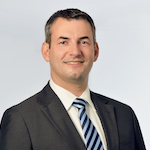
**Dear investors,
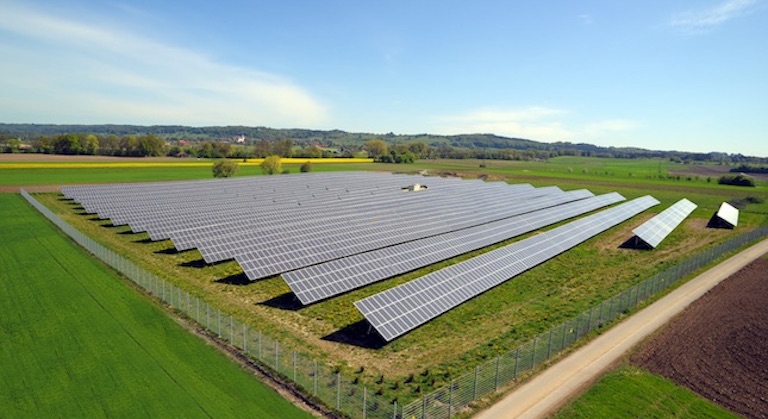
we are delighted to present to you our solar power plant in the sunny Bavarian municipality of Pähl, between Lake Starnberg and Lake Ammersee. You have the opportunity to benefit from the solar income of this plant.
Since 2004, we at Wattner have focused on solar energy in Germany, and with our experience we have been launching safe and profitable investments (Vermögensanlagen) since 2008. Using the sun to generate electricity is absolutely pioneering. It is ecological and sustainable, uses the strongest natural resource known, and offers investors a good return even in today's low-interest environment.
We at Wattner are the only engineer-led issuing house that specialises in the planning, construction and operational management of energy plants, and we are represented on the German financial market with the most German megawatt-scale solar power plants. As an owner-managed company, we are committed solely to our investors, which gives us wide freedom of decision in their interest.
With our expertise and technical understanding as engineers, our commercial competence and the contacts in the industry that we have nurtured over many years, we have invested more than 590 million euros in solar power plants. We built the majority of these plants ourselves, and we therefore know from our own experience every detail relevant to successful project planning and implementation.
More than 7,500 investors have chosen Wattner to date. With their help, since 2008 we have invested a record sum of 480 million euros in 80 solar power plants with a capacity of 332 megawatts.**
Yours, Dipl.-Ing. Ulrich Uhlenhut
Management Board of Wattner AG
The project company
The owner of the solar plant and the borrower is the project company Wattner SunAsset Solarkraftwerk 002 GmbH & Co. KG, with its registered office in Cologne. It has been registered since 2009 with the Cologne Local Court (Amtsgericht Köln) under HRA 26861. It is represented by its general partner, Wattner Energie und Management Verwaltungs GmbH, which in turn is represented by its two managing directors with sole power of representation, Ulrich Uhlenhut and Guido Ingwer.
The project
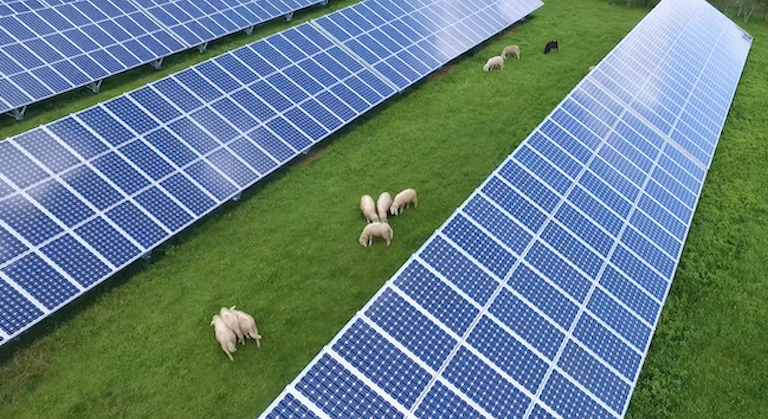
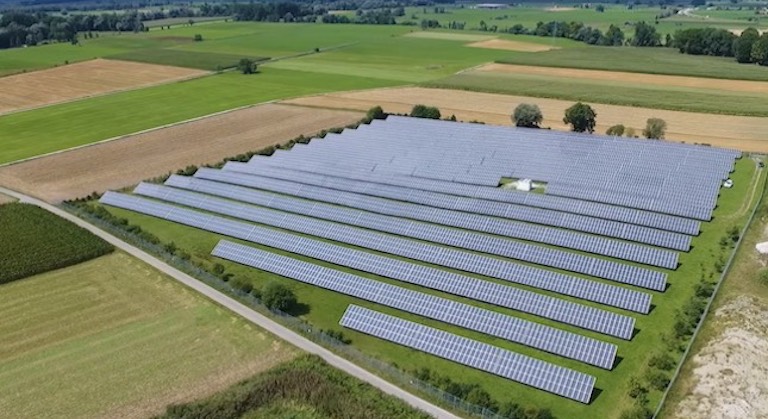
In the municipality of Pähl, Wattner built a ground-mounted solar power plant with a rated capacity of 1,476 kWp in 2009 and has operated it successfully ever since. It is equipped with polycrystalline modules from ET Solar and inverters from Danfoss.
The plant benefits from the provisions of the German Renewable Energy Sources Act (EEG) and receives a statutory guaranteed remuneration of 31.94 cents/kWh until the end of 2029. Under the EEG, the energy generated has priority feed-in to the power grid of Bayernwerk Netz GmbH. The electricity generated is sold directly to the market by NEXT Kraftwerke GmbH, based in Cologne.
Average annual energy production is approx. 1.7 million kWh – in the sunny year 2018 it was even over 1.8 million kWh, which in theory could supply electricity to approx. 450 four-person households in the municipality of Pähl. The average annual energy production corresponds to an average specific yield of approx. 1,148 kWh/kWp.
The land on which the solar power plant was built is owned by the municipality of Pähl and a local private individual. Long-term lease agreements exist with the owners. The plant is maintained by our own operational management company, which looks after all Wattner solar power plants. There is electronics insurance and electronics business interruption insurance with AXA, which cover the main risks. There is also liability insurance with Gothaer.
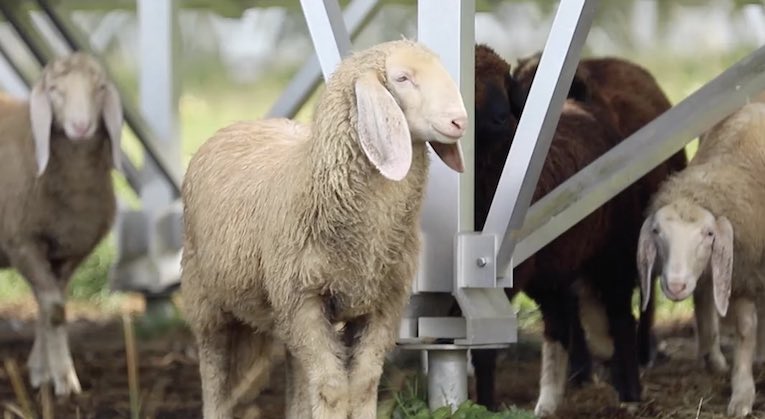
The grounds are kept in check by a local shepherd – or more precisely, by his four-legged helpers:
Since 2015, the solar plant has been financed, among other things, with funds from Deutsche Kreditbank Aktiengesellschaft. As at 31 December 2018, the loans still amounted to EUR 3.2 million and are scheduled to be fully repaid by 31 March 2028. In connection with the financing, collateral was provided to Deutsche Kreditbank Aktiengesellschaft to the usual extent. In particular, the solar plant was assigned as security (Sicherungsübereignung) and the feed-in revenues were assigned. The contractually agreed payments to Deutsche Kreditbank Aktiengesellschaft always take priority over payments to the crowd investors.
The project company is offering crowd investors subordinated loans up to an amount of EUR 1,100,000. After deduction of the funding costs of EUR 77,000, the funds of EUR 1,023,000 are to go to the shareholder of the project company, which will use them to realise further projects in the field of renewable energy and thus drive forward the energy transition.
The crowd investors are investing in a solar plant that has already been built and has been producing reliably for many years, with a statutory guaranteed remuneration. The term of the crowd investment corresponds to the remaining EEG remuneration period until the end of 2029. In this way, interest and repayments to investors are well secured. The loans are to be repaid for the most part in 2028 and 2029. By then, the loan from Deutsche Kreditbank Aktiengesellschaft is scheduled to have already been repaid, and the solar income, after deduction of the operating costs of the solar power plant, can flow to the investors.
Overall, we assume the following liquidity plan for the project company for the years 2020 to 2029 (for a larger view, please click on the graphic):
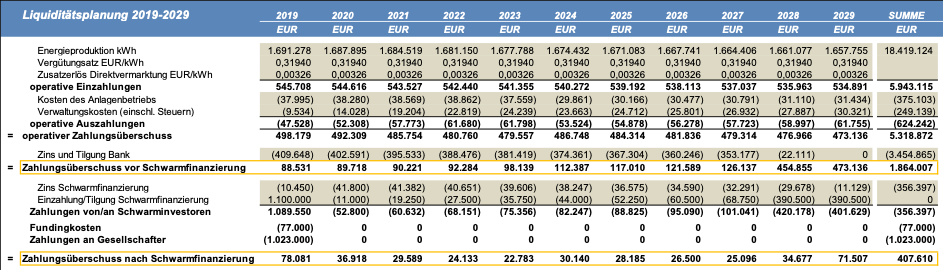
For energy production, we have used the average value for the past years and reduced it by 0.2% per year to allow for possible performance losses of the solar modules. Energy production multiplied by the statutory guaranteed feed-in tariff and the additional revenue from voluntary direct marketing gives the annual receipts of the project company.
The costs of operating the plant include costs for maintenance and operational management, grounds upkeep (the four-legged helpers do not “work” for free), land lease payments, insurance and purchased electricity. We have also assumed an amount of 5 EUR/kWp per year for repairs and maintenance. All of these values are based on contractual agreements or past experience. An inflation adjustment has also been taken into account. Administrative costs include the costs of annual financial statements, tax returns and other costs.
They also include trade tax, which unfortunately rises over the years. In the line “Cash surplus before crowdfunding” you can see how much money should still be “left over” in a year after all costs have been paid and interest and repayments have also been made to Deutsche Kreditbank Aktiengesellschaft. On this basis, we have set the maximum loan amount and the repayment structure for the crowdfunding – always in such a way that a liquidity buffer remains afterwards.
All the values shown are, by their nature, forecasts, which we have set to the best of our knowledge and belief. We have taken a rather conservative approach, with the aim that payments to you, dear crowd investors, are secured even if, for example, the sun shines less in a given year or, contrary to expectations, higher repair costs arise. Despite all the care taken in compiling the figures, we cannot rule out that things turn out worse than expected and that payments to you cannot be made, or cannot be made in full.
| Term | Interest | Repayment | Interest date | Maturity |
|---|---|---|---|---|
| 10 years | 3.80 % p. a. | Instalment loan | 31.12. annually (first on 31.12.2019) | 31.12.2029 |
| Type of loan | Instalment loan |
|---|---|
| Interest payment frequency | annually |
| Available from | 10.09.2019 |
Downloads
Your personal payment plan (3.80 % interest p. a.)
| Year | Date | Payment (gross) | Interest | Repayment | Status |
|---|
Example calculation based on the terms, without accrued interest or a different first interest period; amounts rounded. Only the loan agreement and the investment information sheet (Vermögensanlagen-Informationsblatt) are authoritative. Taxes are not taken into account.